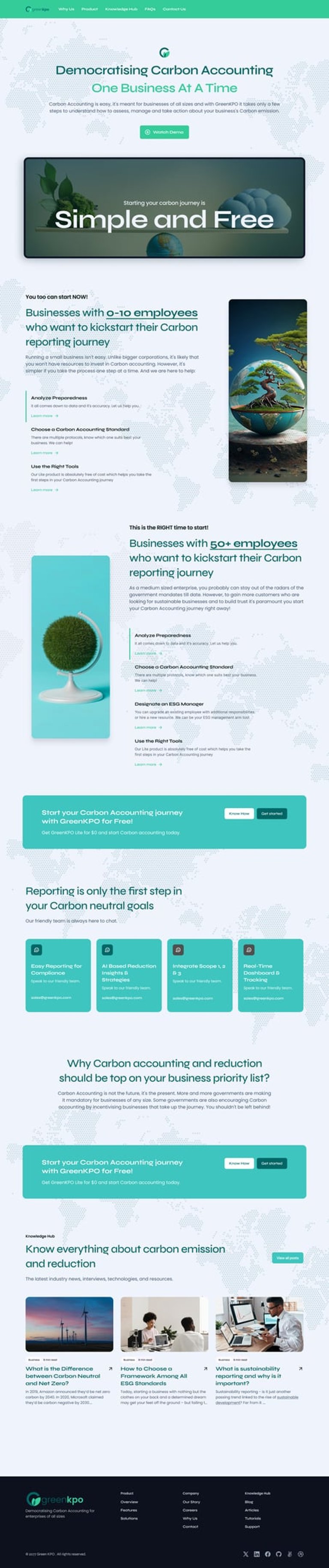
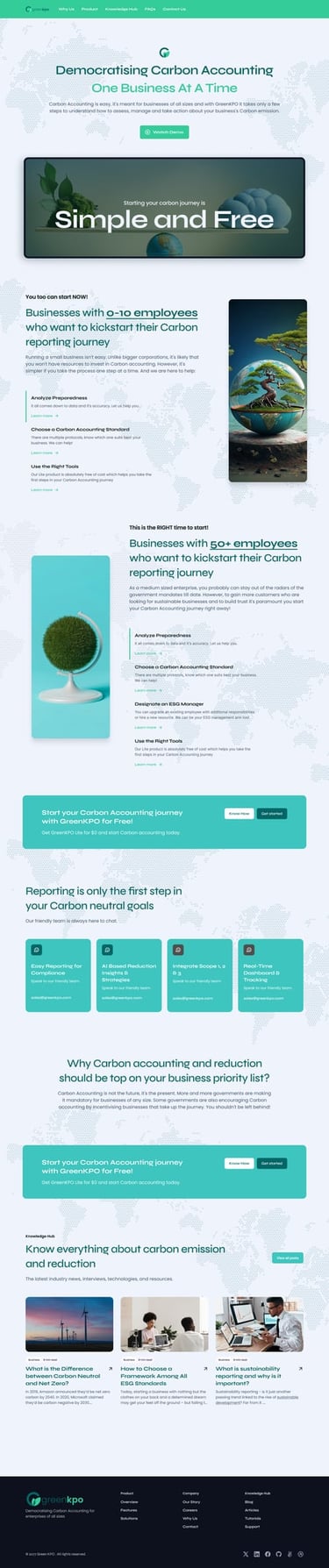
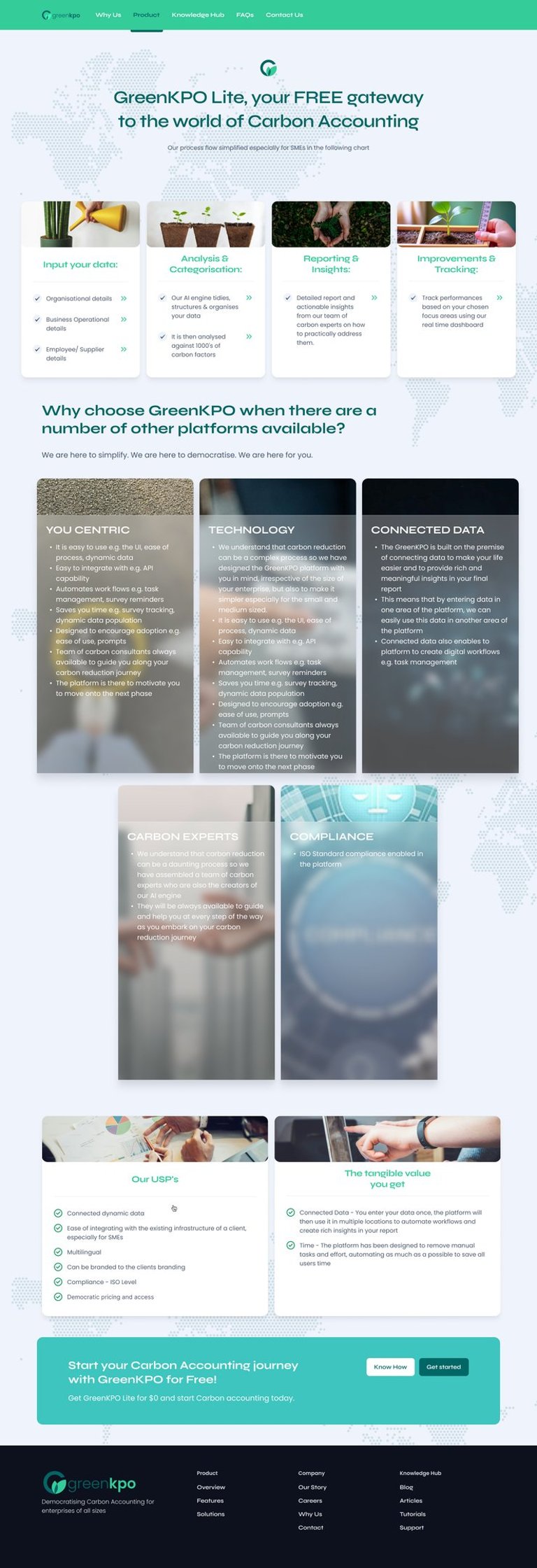
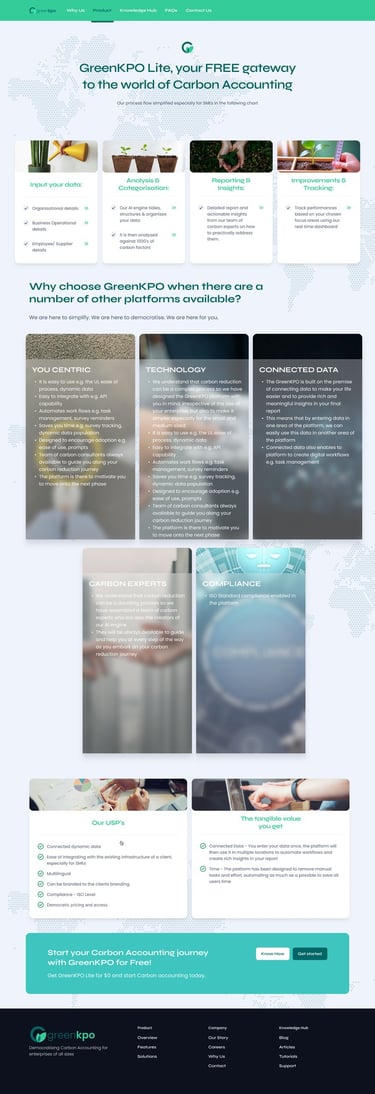
Designing a cleaner carbon accounting experience for GreenKPO
A product-focused website and platform showcase that explains GreenKPO’s value, makes a complex carbon accounting journey feel approachable, and guides SMEs from curiosity to action.
Project overview
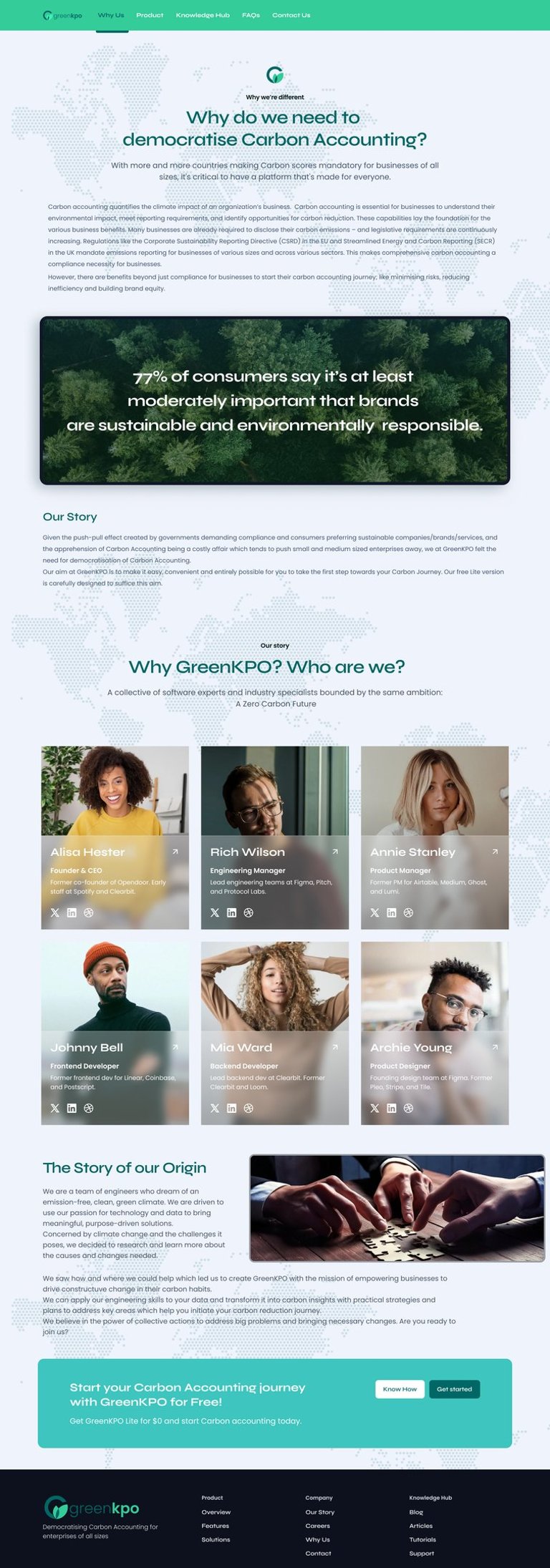
GreenKPO is positioned as a carbon accounting platform for businesses of different sizes. The design system needed to support two things at once: a polished marketing website and product-led pages that visually explain how organisations enter, manage, and benefit from operational carbon data.
Communicate a complex sustainability workflow in a lightweight way
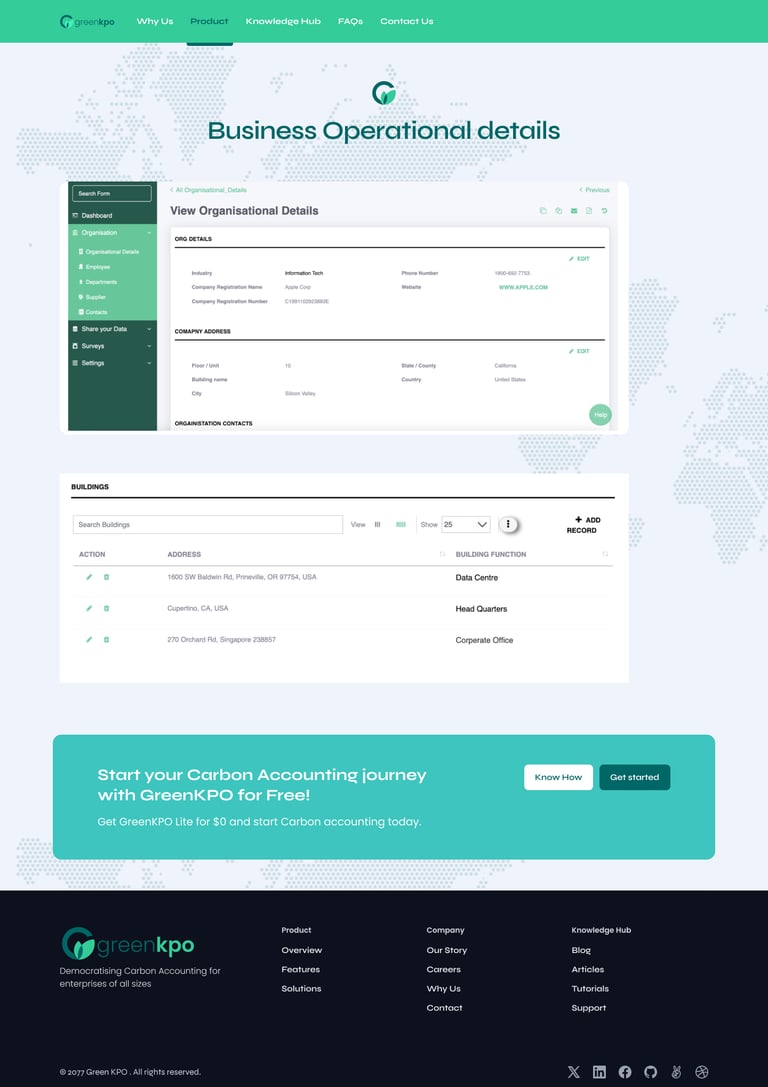
Build confidence with product screenshots and structured content
Make the platform feel modern, approachable, and enterprise-ready
Project intent
Make carbon accounting feel simple, useful, and doable.
The interface balances education, credibility, and product demonstration so first-time users can understand the workflow without feeling overwhelmed.
The UX Challenge
Complex topic
Trust gap
Conversion friction
Carbon accounting can sound abstract and intimidating. The interface needed to break the process into small, understandable steps.
Users need reassurance that the platform is structured, compliant, and capable of guiding them through reporting and action planning.
The website has to educate and convert at the same time, so messaging, visuals, and CTAs need to work together without clutter.
Design approach
I shaped page content around one central promise: make carbon accounting simpler for businesses that are just getting started.
01
02
03
04
Clarify the message
Visualize the Workflow
Product screenshots, cards, and content blocks were used to show where data goes, what users do, and what value they get back.
Build trust through layput
Large whitespace, soft panels, clean typography, and consistent CTA patterns create a calmer, more premium feel for a technical product.
Support discovery
Each page has a clear rhythm: explain, show proof, highlight benefits, and then invite the user to take the next step.